Attic Plumbing Leak Repair in Tampa, FL
On a recent service call in Tampa, FL, I was called out to troubleshoot an active water leak originating in the attic. After safely accessing the attic space, I traced the source of the problem to a damaged 3/4" PVC water supply line. Attic plumbing leaks can quickly lead to water damage, wet insulation, and potential mold issues, so fast and professional leak detection is critical.
Once I confirmed the leak location, I shut off the home’s main water supply and relieved pressure from the plumbing system. This is a standard step for any PVC pipe repair to ensure a clean, controlled work area. Working in a tight attic space, I protected surrounding insulation and framing before carefully cutting out the cracked section of Schedule 40 PVC pipe using a PVC pipe cutter.
I then installed new 3/4" PVC couplings and a replacement pipe section using primer and solvent cement to create a permanent, pressure-tight seal. Proper surface preparation, alignment, and curing time are essential to a long-lasting attic water line repair. After the repair had cured, I slowly restored water pressure and thoroughly checked each joint for any signs of seepage.
This attic leak repair, completed in late 2025 in Tampa, FL, restored the home’s water system to normal operation. Professional leak detection, PVC plumbing repair, and careful inspection help prevent future water damage and keep the property protected for years to come.
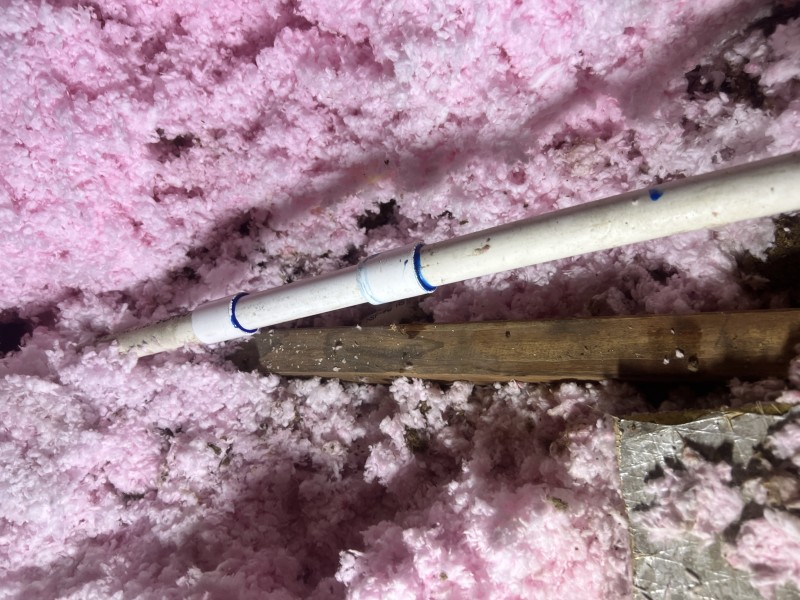
Inspecting the Attic PVC Water Line
In this image, I am working in the attic and inspecting the 3/4" PVC water line that runs above the living space. By following the plumbing through insulation and wooden framing, I can identify exactly where moisture is forming and determine which section of pipe has failed. Detailed attic plumbing inspections like this help locate hidden leaks, protect ceilings and drywall, and prevent structural water damage.
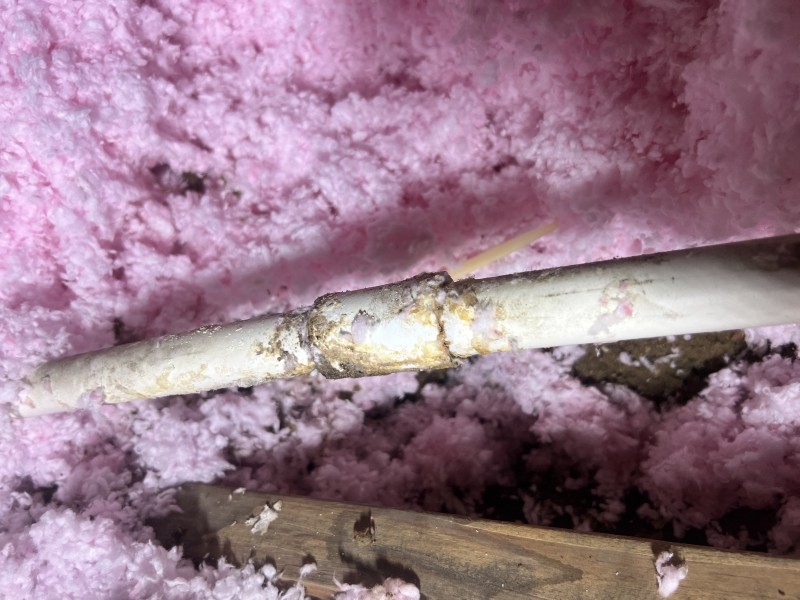
Completing the PVC Leak Repair
This photo shows the PVC pipe repair in progress. After removing the cracked portion of 3/4" Schedule 40 PVC, I installed new couplings and a replacement pipe section using primer and solvent cement to ensure a permanent seal. By aligning the fittings properly and allowing ample curing time, the attic water line can once again handle normal water pressure without any additional dripping or seepage.