Bathroom Sink Stoppage & Drain Repair — Tampa, FL
When we arrived at this Tampa, FL residence in late April 2026, the homeowner reported two separate issues: water pooling on the bathroom floor after every shower, and a bathroom sink that had slowed to an almost complete stop. As a licensed plumbing contractor serving the Tampa area, we know that a slow-draining lavatory is rarely just a surface problem — and this job proved exactly that. Our first move was a systematic top-to-bottom inspection of both the bathtub and the bathroom sink drain system to determine the true root cause before touching a single tool.
Starting with the bathtub, we conducted a thorough leak inspection — checking the drain flange seal, the overflow plate gasket, the caulking along the tub surround, and the supply connections. After a detailed assessment, no active plumbing leak was found in the tub itself. The source of the floor puddling turned out to be a makeshift shower curtain that was not properly sealing the enclosure, allowing shower water to escape over the tub edge with every use. While not a plumbing repair in the traditional sense, identifying this correctly saved the homeowner from unnecessary and costly exploratory work — and we made sure they understood exactly what a proper curtain liner installation looks like to prevent recurrence.
Turning our full attention to the bathroom sink, the situation was considerably more serious. The lavatory drain was completely stopped up — zero flow — and upon closer inspection, the existing drain body was physically deteriorated, with cracks and holes that had compromised the entire assembly. A drain in this condition is not just a slow-drain problem; it is an active risk for cabinet water damage and sewer gas intrusion into the living space. There was no patching this — the old drain hardware had to come out completely before we could assess what we were dealing with inside the waste arm.
Once the failed drain assembly was removed, we found the waste arm packed solid with a dense buildup of black organic matter — the classic combination of soap scum, hair, toothpaste residue, and decomposed debris that accumulates inside a P-trap and drain arm over months or years of use. We ran a handheld drain snake through the waste arm, fully clearing the blockage and restoring unrestricted flow through the drain line. With the line clean, we rebuilt the entire drain assembly using a new master trap and extension tube, bringing everything up to proper working condition with a watertight seal. The completed repair means smooth drainage, no sewer gas pathways, and a drain system built to last — exactly what Tampa homeowners deserve from a professional plumbing service.
Job Site Photos — Bathroom Drain Repair, Tampa FL
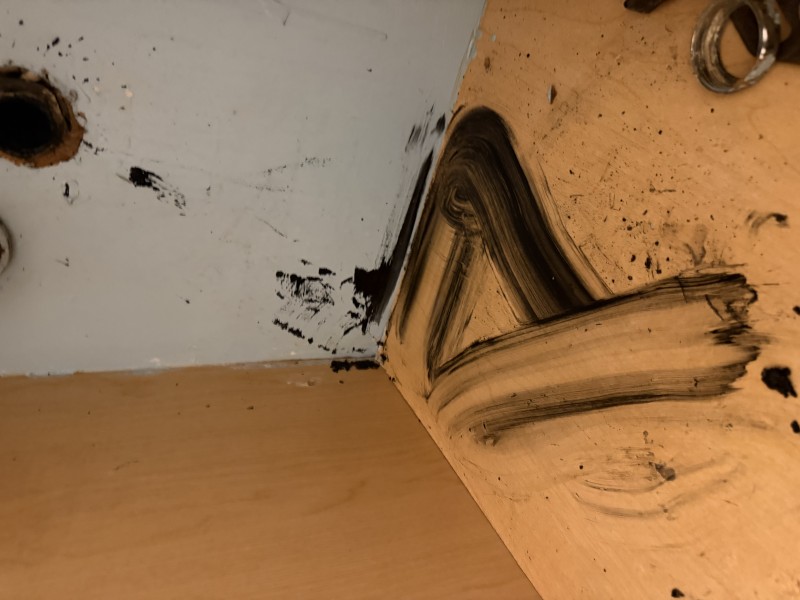
Cabinet Damage from the Failing Drain
This is the inside of the sink cabinet when we opened it up — black water staining running down the cabinet wall, caused by the deteriorated drain assembly leaking over time. This kind of dark residue buildup is a direct sign that the drain hardware above had been failing for a long time, letting wastewater and organic matter seep onto the cabinet floor. Left unaddressed, this level of moisture damage leads to wood rot and mold growth behind the vanity.
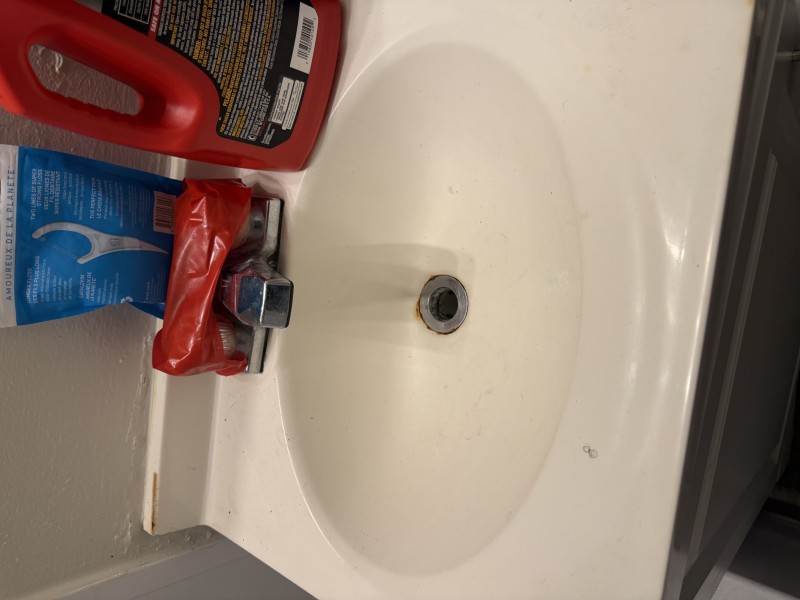
The Clogged Lavatory — Zero Flow
A top-down view of the bathroom sink as we found it — a white porcelain lavatory that had completely stopped draining. The drain opening shows the backed-up condition that brought us out on this call. This is what a fully clogged waste arm looks like from above: standing water, slow gurgling at best, and a drain assembly below that was too deteriorated to pass any flow through the line.
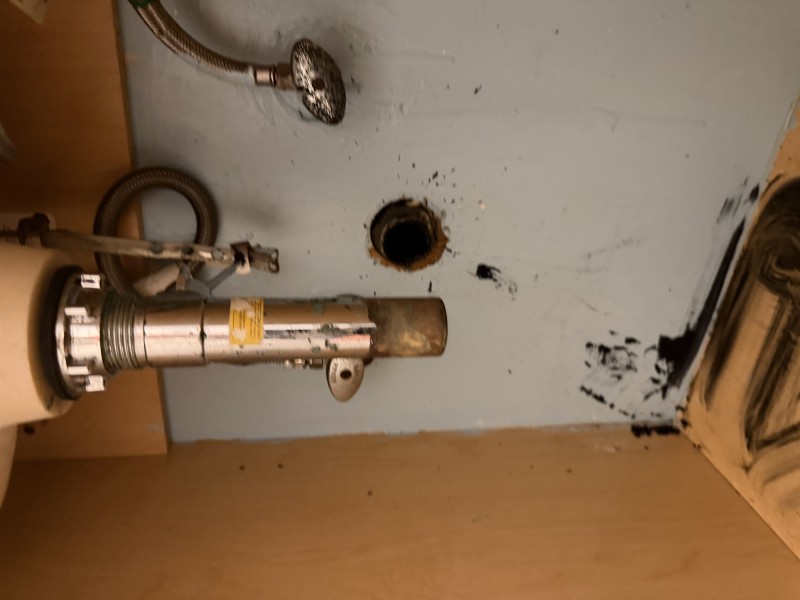
Black Buildup Around the Pipe Penetrations
This shot shows the supply line pipes at the wall with heavy black organic matter coating the surfaces around the pipe penetrations. This kind of gunk accumulation in the cabinet cavity is a direct result of years of moisture, slow leaks from the failed drain, and decomposed debris working its way into every corner. Documenting this before we begin work ensures we clean up the full scope of the damage, not just swap out the visible components.
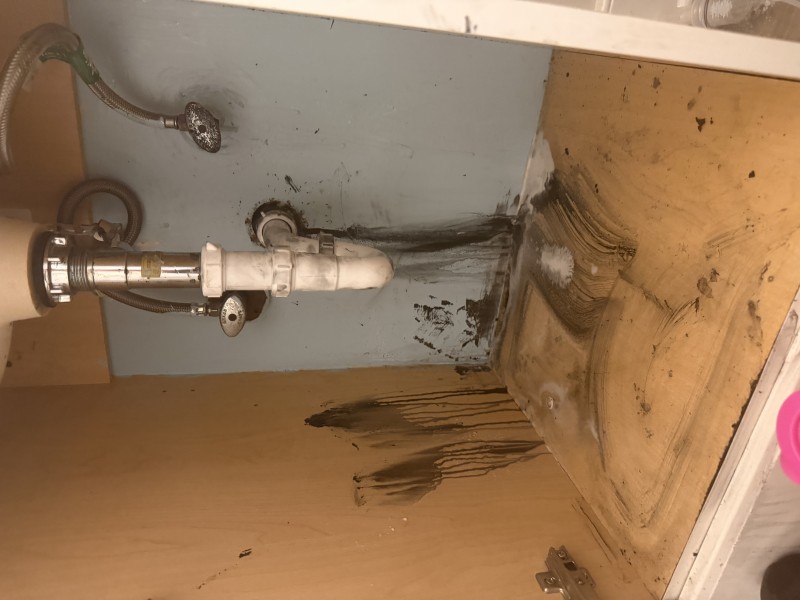
Drain Rebuild Complete — Pre-Cleanup
The new drain assembly fully installed and functional — this shot captures the rebuild right after completion, before final cleanup. The black staining on the cabinet walls is still visible from the years of leaking caused by the old deteriorated hardware, but the new drain components are in place and the line is flowing freely. The staining is cosmetic at this stage; the plumbing work is done and confirmed leak-free before we wrap up the job.
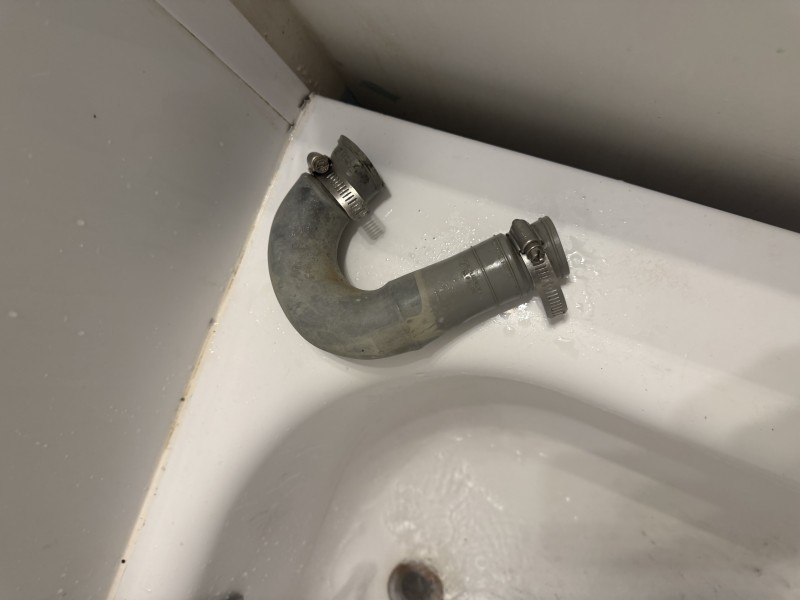
Old P-Trap Removed — Worn Hardware Out
This is the old P-trap after we pulled it out — a chrome trap that had reached the end of its service life. You can see the wear and corrosion on the trap body and fittings that had been contributing to the drain problems. Removing this hardware completely is a necessary step before we can rebuild the drain correctly; leaving old, compromised trap components in place alongside new parts is a guaranteed callback waiting to happen.
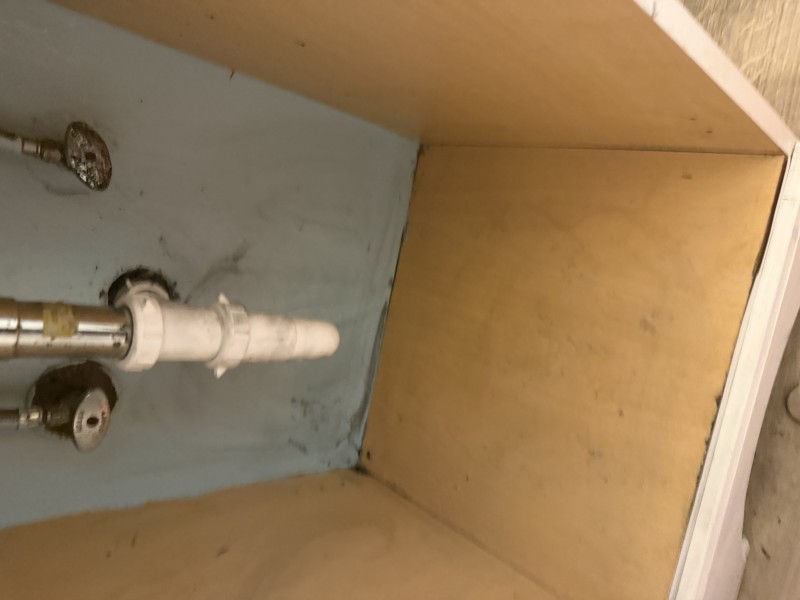
Completed Drain Rebuild — Clean & Clear
The finished repair — new white PVC drain pipe and extension tube running cleanly up through the cabinet floor, all connections tightened and flow-tested. The lavatory now drains freely with zero slow-drain symptoms and no leaks at any fitting. This is what a proper drain rebuild looks like: clean new materials, correct pipe routing, and a solid connection to the waste arm that will hold up for years to come.