Gas Line Repair and 3/4-Inch Gas Line Replacement in Davenport, FL
This gas line repair project in Davenport, Florida was completed in March 2026 after a leak was traced from the gas meter to the pool heater. During our inspection, we found that the existing 3/4-inch gas line had significant corrosion and visible deterioration, especially in the older exterior piping and buried sections. When a gas pipe starts to rust and break down, it can create an active fuel gas leak, reduce system reliability, and become a serious safety concern for the home.
After diagnosing the problem, we determined that replacing the damaged 3/4-inch gas line was the best long-term solution. In outdoor gas piping systems, corrosion can spread over multiple sections of pipe, making small spot repairs less dependable than a proper replacement. This type of gas leak repair requires careful troubleshooting, safe removal of compromised materials, and installation of new gas piping components that can provide a more secure connection from the meter to the pool heater.
A professional repair like this may involve excavation along the gas line route, cutting out deteriorated pipe, installing new approved gas piping, reconnecting fittings, and checking alignment and support along the run. Common plumbing and gas piping tools used on these jobs include pipe wrenches, cutters, threading equipment, fittings, risers, couplings, and gas-rated sealants. Pressure testing and leak verification are also essential steps when restoring fuel flow to outdoor equipment like a pool heater.
Our goal was to solve the leak in real time while improving the overall durability of the gas system. By removing corroded pipe and replacing the affected 3/4-inch gas line, we restored a safer and more dependable gas supply route for the equipment. This project is a strong example of why prompt gas leak detection, corroded pipe replacement, and professional gas line repair are so important for homeowners in Central Florida.
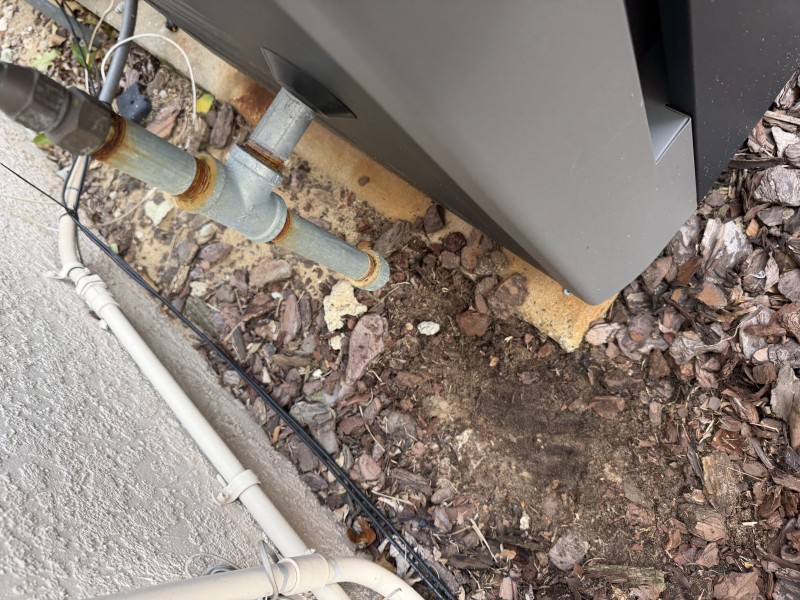
Inspecting the Corroded Pool Heater Gas Connection
In this image, we were checking the gas pipe connection right at the base of the pool heater where corrosion had formed around the threaded fittings. This is a common place to find rust buildup and gas piping deterioration because exterior exposure can slowly break down the metal over time. Identifying this kind of corrosion is an important part of gas leak detection and helps confirm when a 3/4-inch gas line replacement is the safer long-term repair.
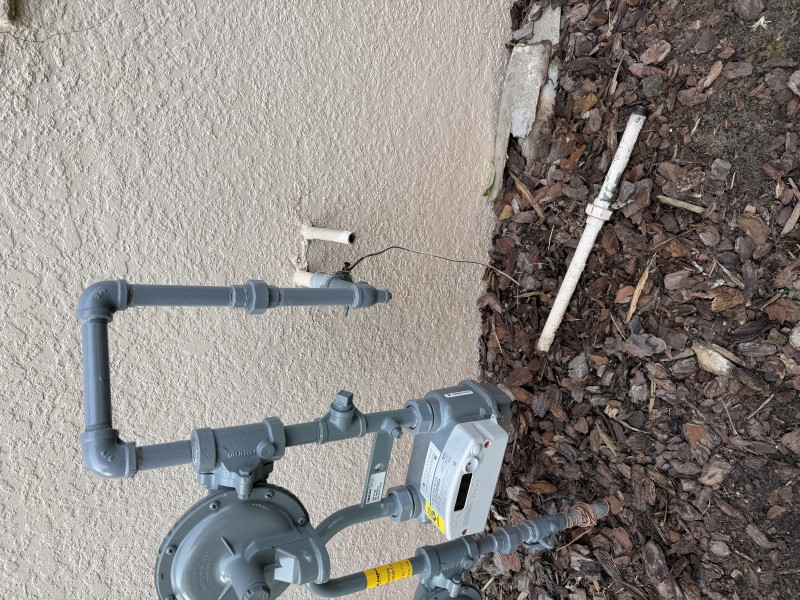
Installing a Clean New Gas Piping Assembly
This photo shows the updated gas piping assembly with a new regulator setup and freshly installed exterior gas pipe. After removing damaged materials, we rebuilt this section with clean fittings, proper alignment, and secure threaded connections to support safe fuel delivery. Careful installation is critical on any gas line repair because even a small issue at a fitting or joint can affect pressure, performance, and overall safety.
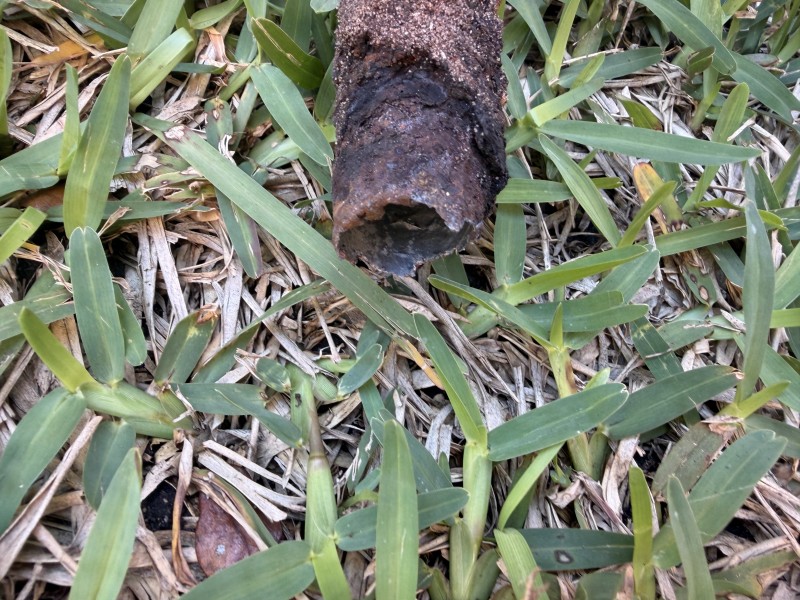
Close-Up of the Failed Corroded Gas Pipe
Here we documented the end of the old gas pipe after removal, and the heavy corrosion made it clear why the line could not be safely reused. The pipe wall had deteriorated badly, which is exactly the kind of failure that can lead to an active gas leak and unreliable appliance operation. Capturing close-up images like this helps show the true condition of the buried gas line and supports the need for full pipe replacement instead of a temporary patch.
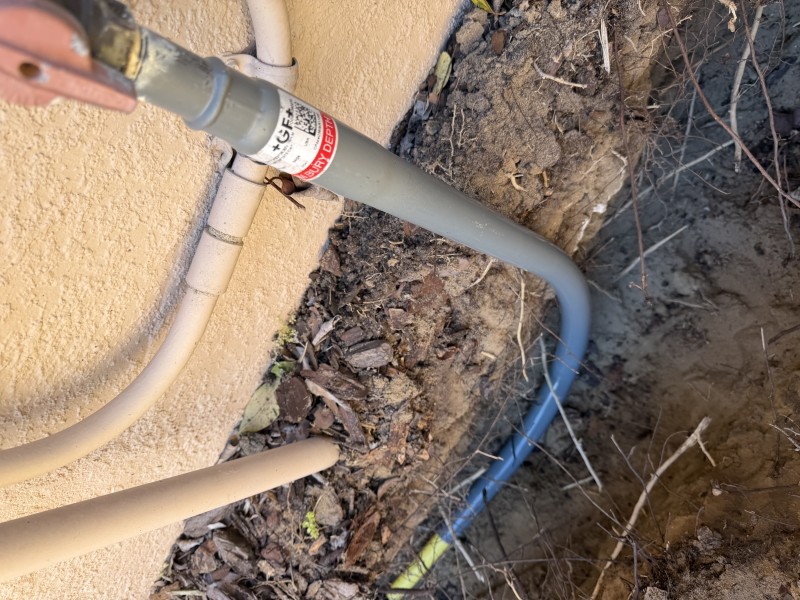
Routing the New 3/4-Inch Gas Line Into the Trench
This image shows the new coated gas line and riser dropping into the trench as part of the replacement run. At this stage, we were making sure the gas piping had a clean transition from the above-ground connection down into the buried section of the line. Proper routing, support, and material selection all matter on underground gas line repair jobs because they help protect the system from future wear and service issues.
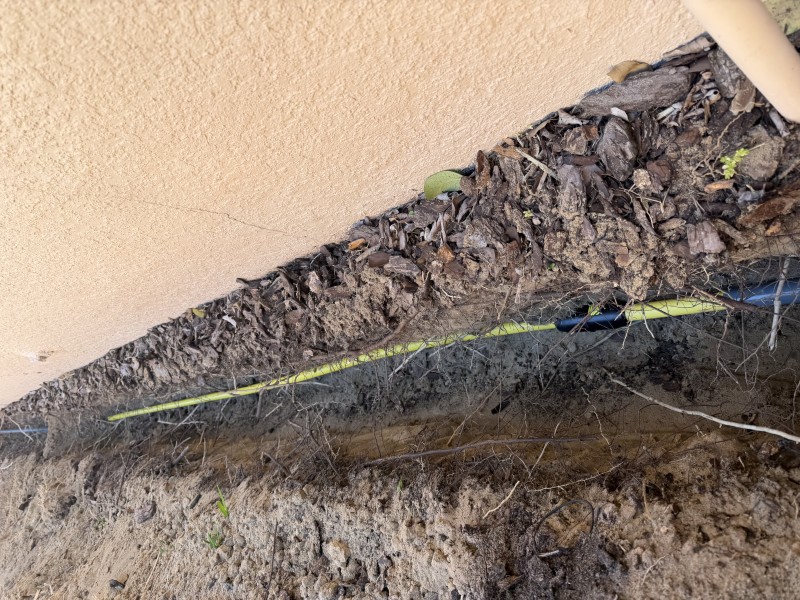
Excavating the Buried Gas Line Path
In this photo, we had the trench opened up along the side of the home so we could expose the buried gas line route and replace the damaged section properly. Excavation is often necessary during outdoor gas leak repair because underground corrosion and pipe failure are not always visible from the surface. Opening the line path allowed us to remove the compromised piping and install a more reliable gas supply line to the pool heater.
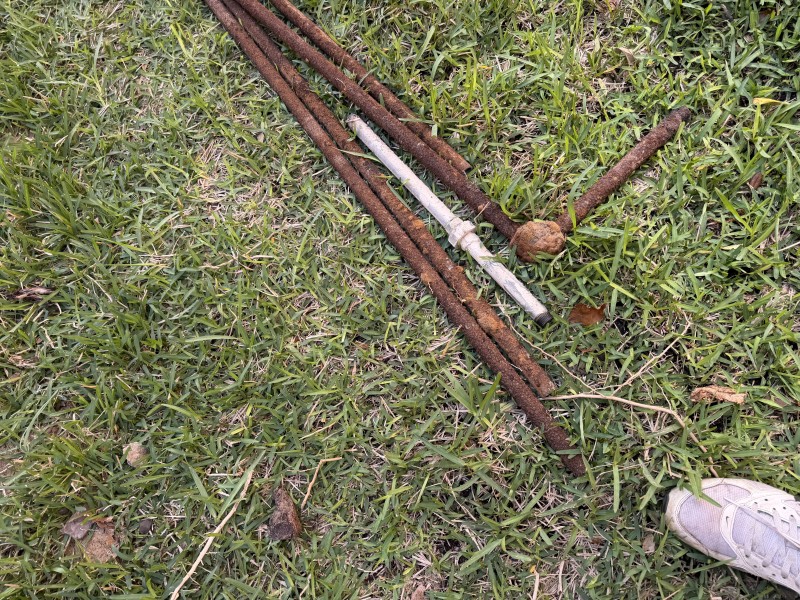
Removed Gas Pipe Sections Showing Widespread Corrosion
This final image shows several sections of the old gas pipe laid out on the grass after removal, with heavy rust visible along nearly the full length. Seeing the pipe out of the ground makes it easier to understand how widespread the corrosion was and why replacement was the right solution. When a buried gas line reaches this condition, full gas pipe replacement is the best way to restore safe fuel flow and dependable performance.