Leaking Main Water Valve Repair & Brass Shut-Off Upgrade (Tampa, FL)
This residential plumbing service call took place in Tampa, Florida and was completed in January 2026 after a leak was reported at the home’s main water shut-off. A leaking shut-off valve can quickly lead to water damage, so the first goal was isolating the water supply, confirming the exact leak point, and planning a repair that would hold up under normal household water pressure.
The existing shut-off was a 1" CPVC ball valve. Over time, plastic valves and older CPVC connections can weaken, develop seepage around joints, or fail at the valve body. For a long-term fix, we upgraded the system with a full-port 1" brass ball valve to improve durability, reliability, and ease of operation at the main water shut-off.
After shutting down the supply and relieving line pressure, the failed valve was removed using proper plumbing practices and tools such as CPVC cutters, approved solvent cement, and sealing materials for threaded transitions. Once the new brass shut-off was in place, we performed a controlled repressurization and leak check to verify a watertight installation.
During testing, we discovered an additional leak at a nearby CPVC fitting. That can happen when older fittings are disturbed during a valve replacement. To fully resolve the issue, the leaking fitting was removed and replaced with a new 1" CPVC female adapter. After proper cure time, we retested to confirm the assembly was sealed and the main shut-off functioned smoothly.
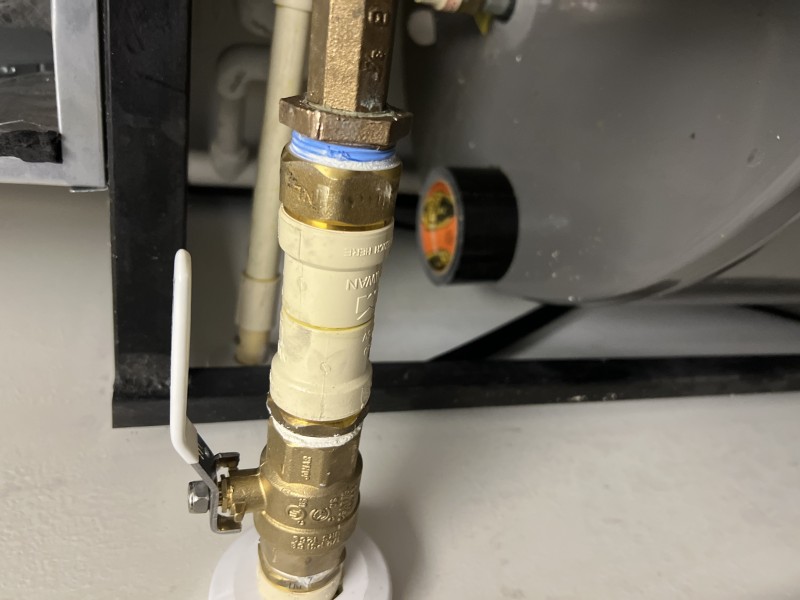
New Brass Shut-Off at the Main Line
This close-up shows the upgraded 1" brass ball valve tied into the existing CPVC line. After confirming the leak source, I installed the new shut-off and checked alignment so the valve operates smoothly. A durable brass valve is a strong choice for a main water shut-off replacement because it handles daily use, pressure changes, and long-term reliability better than many plastic valves.
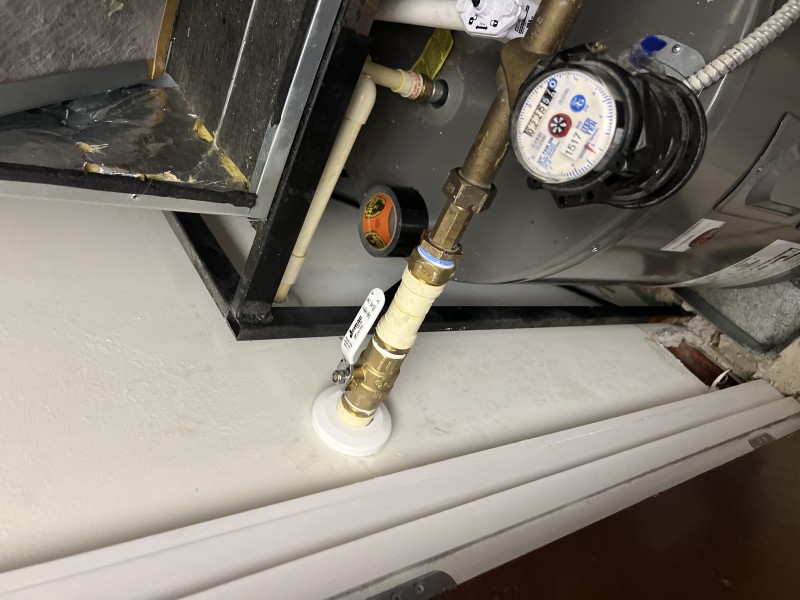
Final Assembly & Leak Testing
This wider view shows the full shut-off area after the repair. Once the brass valve was installed, I performed a slow pressurization and leak detection check and found a secondary drip at a CPVC connection. I removed the compromised fitting and replaced it with a new 1" CPVC female adapter, then retested to confirm a clean, watertight seal and a reliable water shut-off valve repair.