When we received the service call from a homeowner in Polk City, FL in April 2026, the symptoms were familiar — slow-draining fixtures, a subtle gurgling sound from the main line, and a faint sewer odor near the floor drain. These are the classic early warning signs of a sagging main drain, commonly known as a pipe belly. A pipe belly develops when a section of the underground sewer line loses its required downward pitch — typically ¼ inch of fall per linear foot — causing wastewater and solids to pool in the low spot rather than flowing freely toward the municipal sewer connection. In Florida's sandy, shifting soil conditions, this is one of the most common main drain problems we encounter.
Before touching a shovel, we ran a full sewer camera inspection through the main cleanout access point. Our push-camera system let us visually confirm a defined belly roughly 8 to 10 feet out from the foundation, with standing water clearly visible in the sag — an unmistakable sign of improper drain pitch. The video inspection also let us rule out other culprits: no tree root intrusion, no collapsed sewer pipe, and no significant joint separation. Having that camera footage meant we knew exactly where to excavate, how deep the pipe was sitting, and what condition the surrounding drain line was in before we ever broke ground. That kind of diagnostic precision is what separates a clean, efficient repair from unnecessary digging and guesswork.
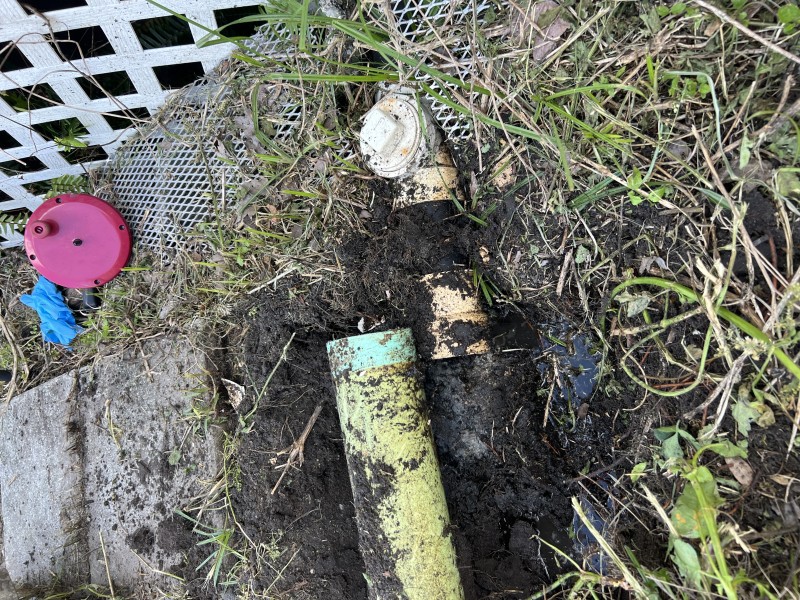
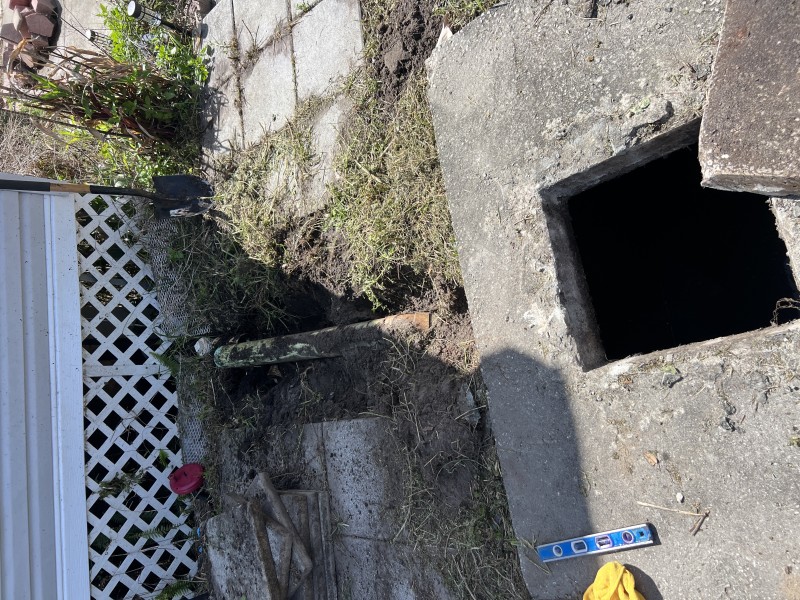
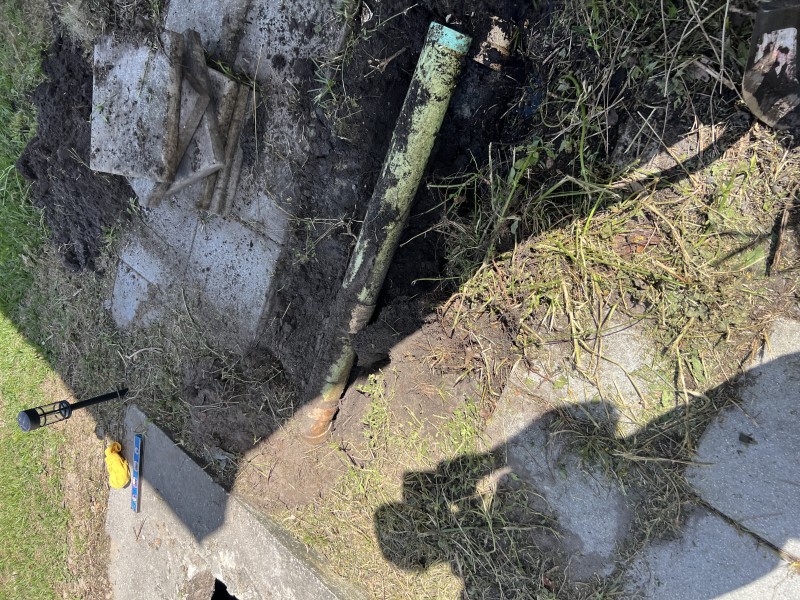
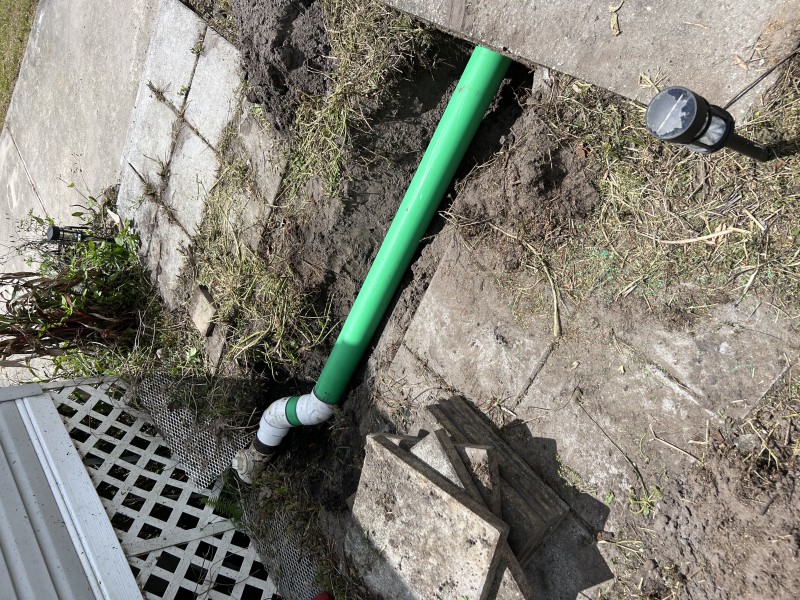
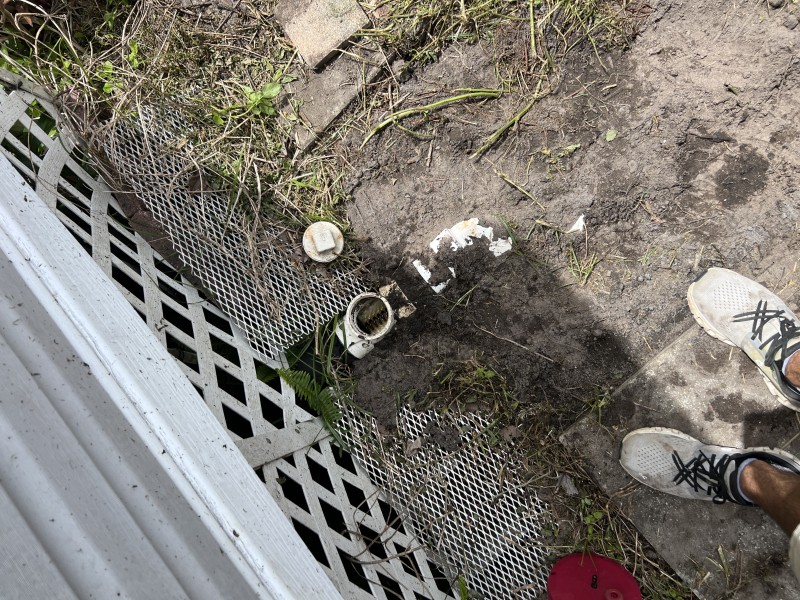
Once we marked the repair zone using our camera locator, we excavated down to expose the affected section of Schedule 40 PVC main drain pipe. The pipe had clearly dropped out of grade — visually dipping downward instead of maintaining a consistent slope — and the sandy soil bedding beneath it had eroded and settled over time, which is exactly what allows a drain line belly to form. We carefully assessed the full pipe condition along the exposed run, checking for stress fractures, separation at couplings, and any signs of root infiltration at the joints. The pipe was still structurally intact, which meant a full sewer line replacement wasn't necessary — we could correct the grade and re-bed the line properly.
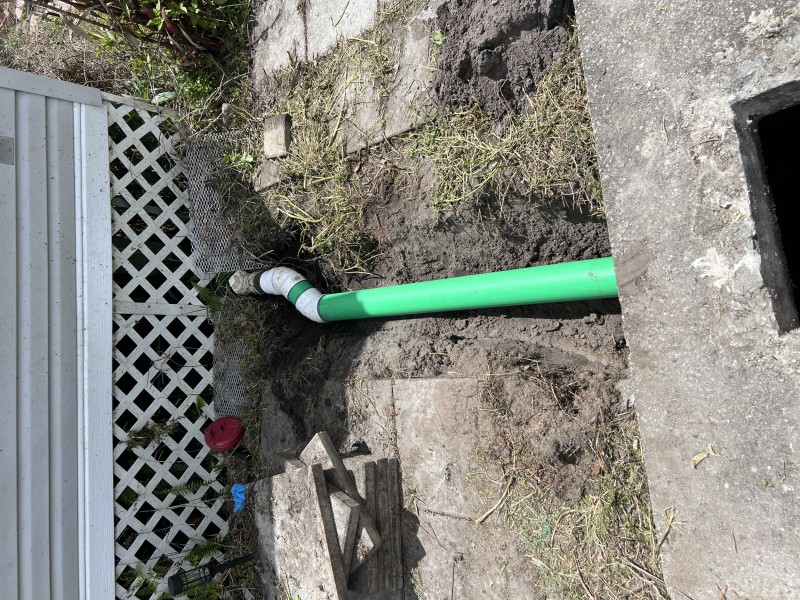
The repair centered on re-establishing the correct slope along the sagging section. We removed the affected pipe segment, re-compacted the subgrade soil, and laid a clean crushed-stone bedding layer beneath the pipe — proper bedding is a step that's often skipped during original installations, and it's one of the primary reasons drain lines develop bellies over time. We re-connected the line using rubber coupling fittings, verified pitch with a digital level at multiple points along the run, and confirmed a watertight seal at every joint before backfilling. A final post-repair camera pass confirmed the belly was eliminated, the main drain line was flowing clean, and there was no standing water anywhere along the line. For homeowners in Polk City and throughout Polk County, catching a sagging drain line early is the difference between a straightforward repair and a far more disruptive sewer line replacement — if your drains are slow or gurgling, don't wait.