Water Jet Hydro Scrub — Exterior Main PVC Sewer Line | South Tampa, FL
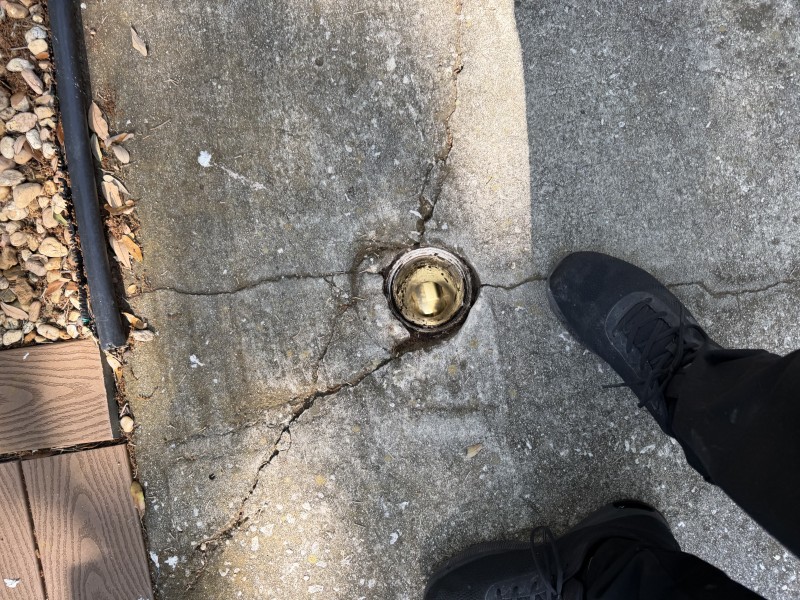
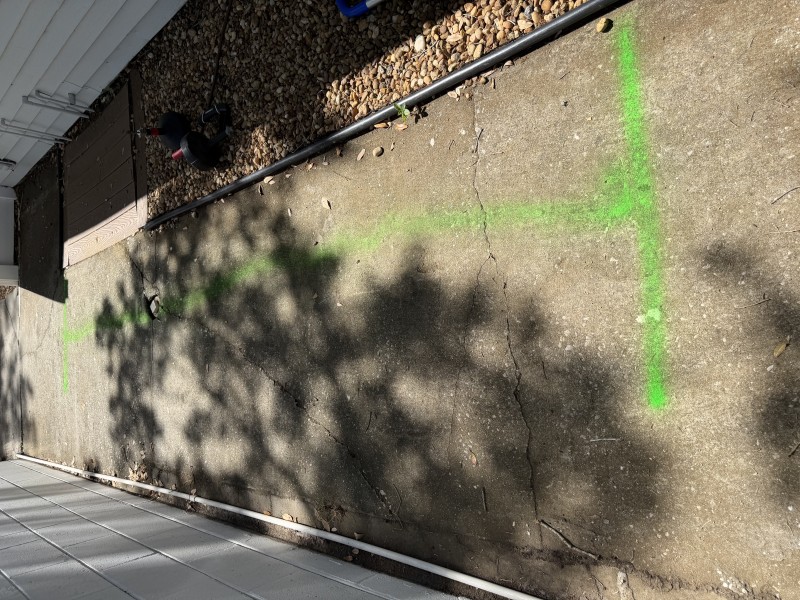
When we received the call from this South Tampa homeowner in April 2026, the situation was urgent and unmistakable — a powerful sewer gas odor had taken over the guest house, and the guest toilet was actively backing up into the bathtub. These are textbook symptoms of a fully or partially blocked main sewer line, and in established Tampa, FL neighborhoods with aging lateral pipe systems, a clogged exterior PVC main line is almost always at the root of the problem. Upon arrival, our first priority was to locate and access the exterior cleanout so we could assess the severity of the blockage and determine the right course of action. The combination of sewage odor and toilet backflow into the tub told us everything we needed to know — wastewater had nowhere to go, pressure was building upstream, and this was far beyond the reach of a standard drain snake. A full high-pressure hydro jet sewer cleaning service was the only appropriate response.
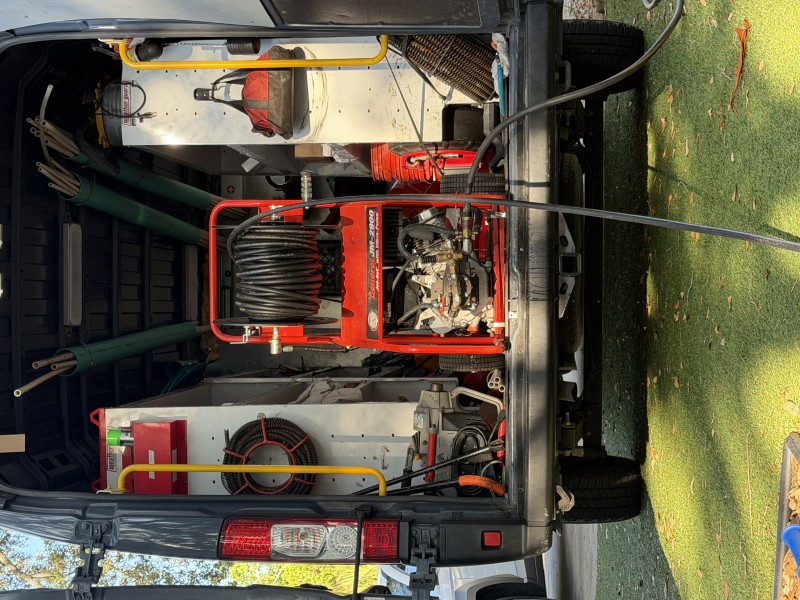
With the exterior cleanout accessed, we introduced our professional-grade hydro jetting equipment into the main PVC sewer line and began a thorough hydro scrub of the entire run. Hydro jetting operates at water pressures typically between 3,000 and 4,000 PSI, delivering a concentrated high-pressure water stream capable of cutting through years of accumulated grease buildup, sediment, biofilm, and organic debris — all things a traditional drain auger or cable snake leaves behind. We worked the jetter nozzle through the line in both directions, making multiple passes to ensure the pipe walls were fully scoured. The blockage was substantial, but after sustained jet cleaning effort, sewer flow was finally restored. Watching wastewater move freely again is the most satisfying moment in this line of work — but in this case, our sewer camera inspection post-cleaning uncovered structural problems that required full documentation before we could close the job.
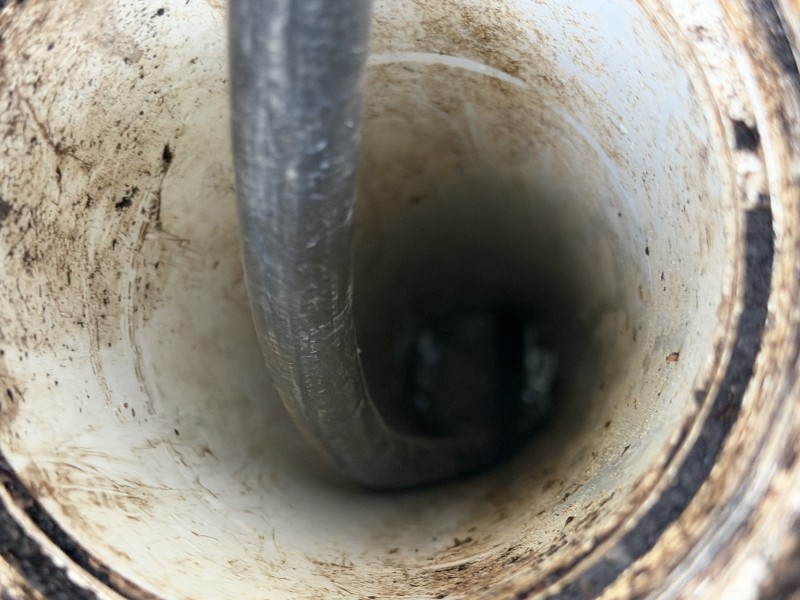
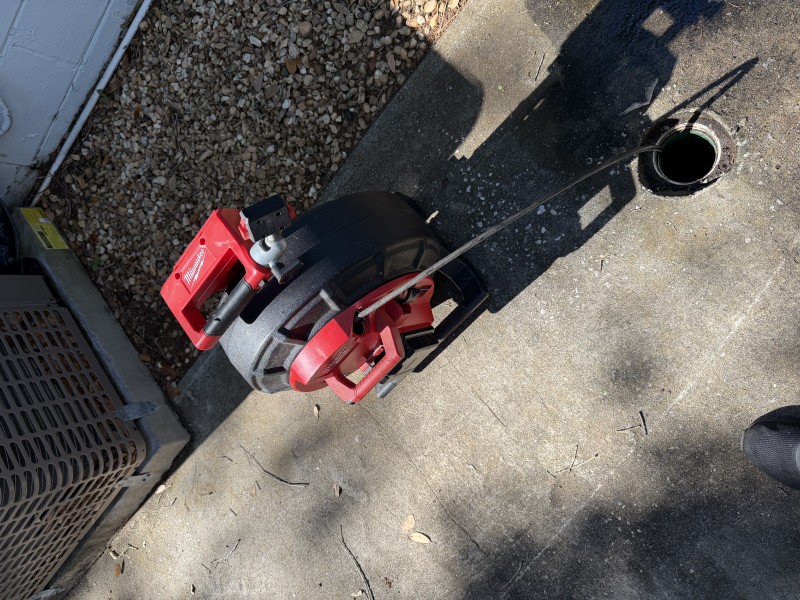
Post-jetting camera inspection of the exterior main PVC line revealed a troubling condition: standing water sitting at roughly half-pipe depth approximately five feet before the cleanout and again about ten feet beyond it. In sewer diagnostics, this pattern of standing water is a strong indicator of pipe bellying — a sag or low spot in the pipe where gravity works against you, causing wastewater to pool rather than drain toward the municipal sewer connection. We also pinpointed that this saturated zone coincided closely with the junction where the interior washer drain line ties into the main sewer line. This secondary drain connection is a known accumulation point; when the entry angle or elevation is even slightly off, it promotes turbulence, debris trapping, and repeat blockages over time. For Tampa homeowners experiencing recurring slow drains or sewer backups, a washer drain tie-in junction like this one is always worth investigating during a professional sewer camera inspection.
Perhaps the most critical finding of the entire job was a section of PVC pipe just past the cleanout where the line transitions through a tight 45-degree angle and immediately reverses direction — creating a sharp directional change that functions essentially like a debris trap. During the hydro jetting process, both the jetter nozzle and our sewer inspection camera became caught in this section, which is a clear and documented indicator of a structural defect. In code-compliant sewer line installation, directional changes should always use long-sweep elbows or gradual fittings to preserve flow velocity and prevent solids from bridging across the bend. This configuration does neither. No volume of routine drain cleaning, hydro jetting, or sewer maintenance will produce a lasting fix here — the angular pipe section needs to be physically excavated and repaired using proper PVC fittings that allow for unrestricted, full-bore sewer flow. Without this targeted sewer line repair, backups will return. South Tampa homeowners dealing with chronic drain problems, recurring sewer odors, or unexplained toilet backups should always request a full sewer camera inspection to rule out structural defects like this one before committing to any maintenance service.